Schnell & einfach zur perfekten Bewerbung | ⏱️ Sofortiger Download | 💼 Kein Abo – beliebig oft wiederverwenden | 📝 Alle Vorlagen in Word – je nach Vorlage auch Canva, Google Docs oder Pages
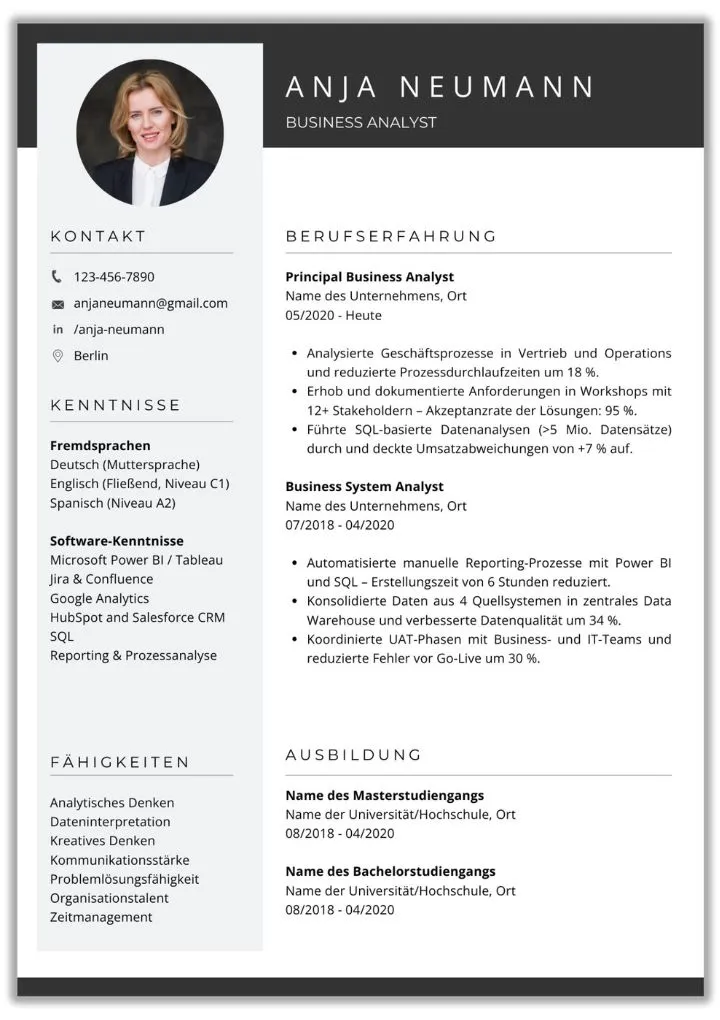
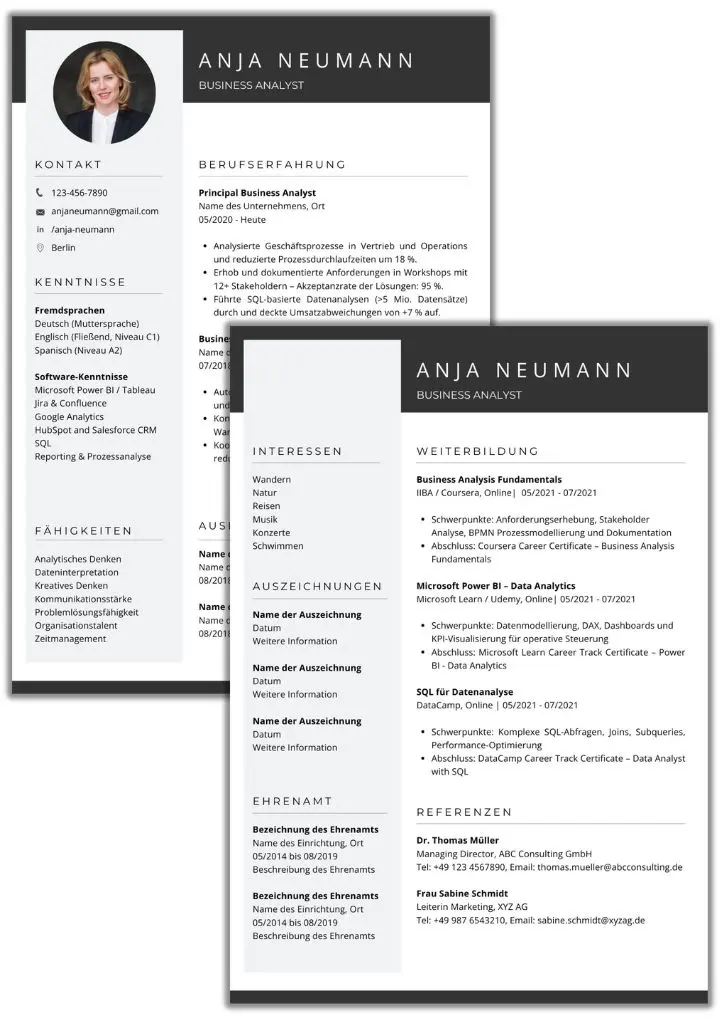
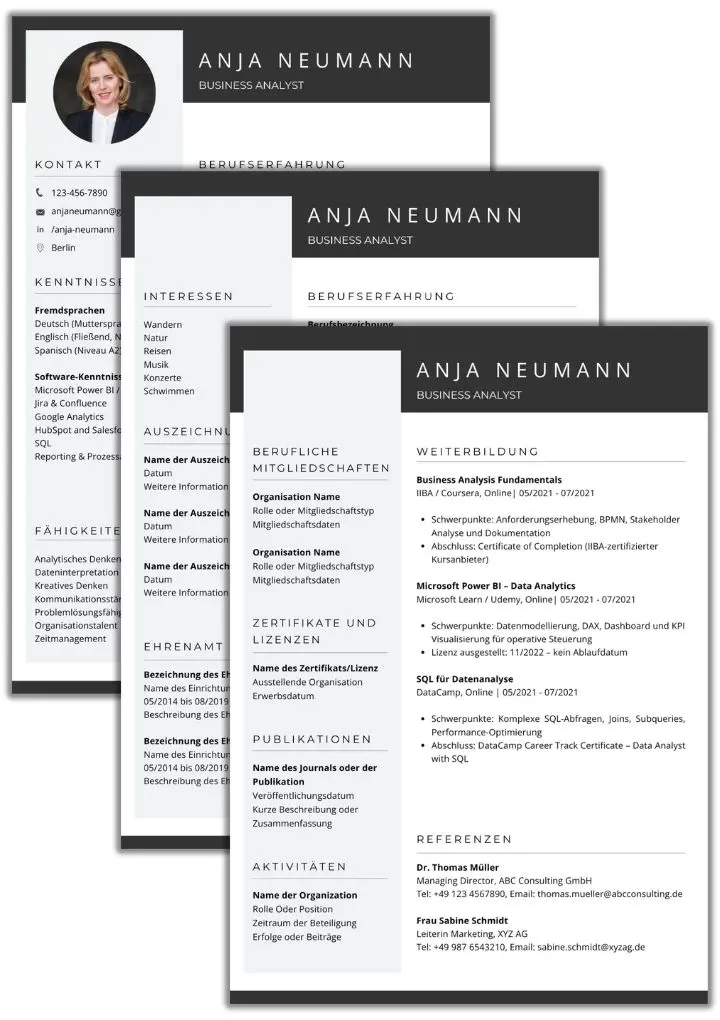
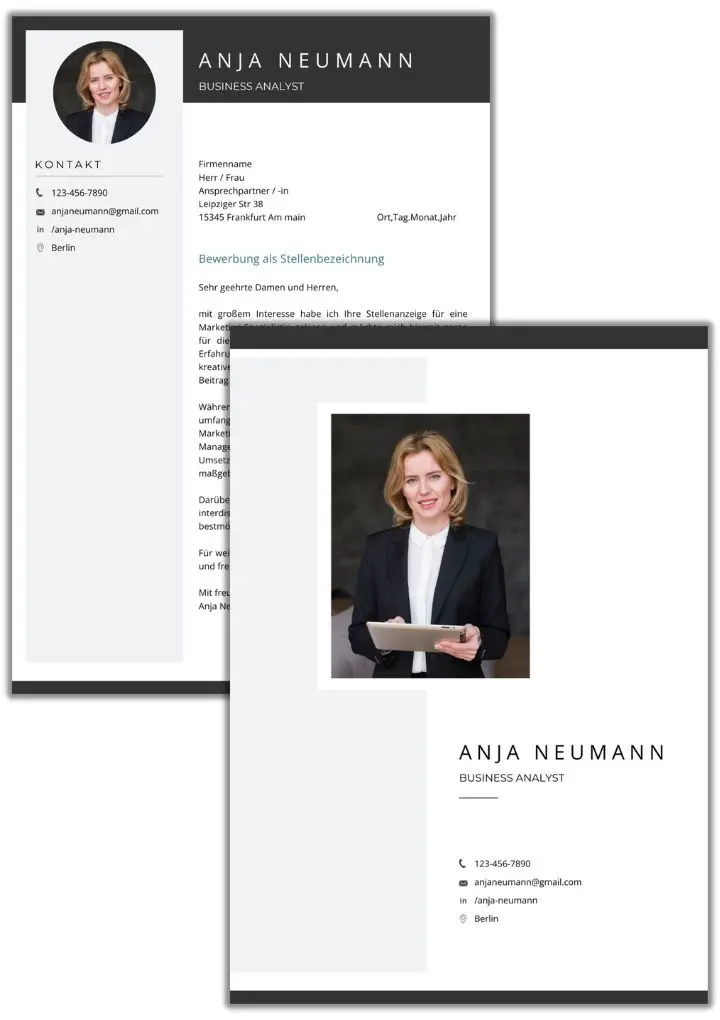
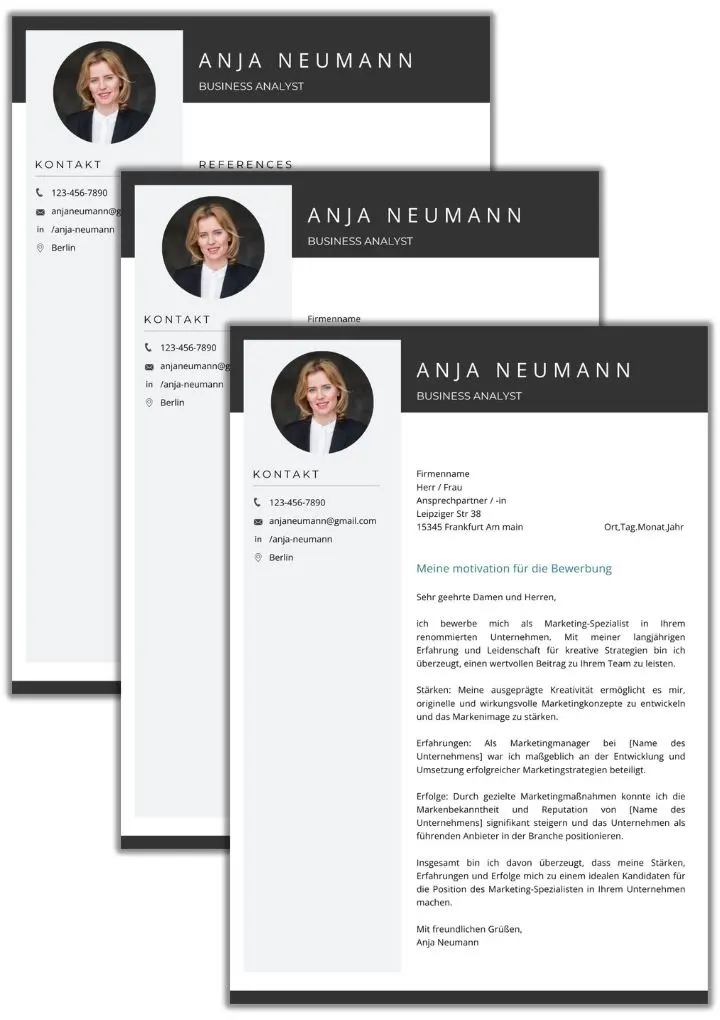
Lebenslauf Vorlage Business Analyst – Professionelle CV für Word, Google Docs, Pages & Canva
Moderner Lebenslauf für Business-Analyse
Was Käufer über diese Vorlage sagen
Über 80 Kund:innen haben bereits Vorlagen aus diesem Shop gekauft
Verifizierter Kauf (Etsy)
⭐️⭐️⭐️⭐️⭐️
„Sehr gutes Produkt und freundlicher Kontakt mit dem Verkäufer“
— Katja Techet, 14. Jan 2025
Verifizierter Kauf (Etsy)
⭐️⭐️⭐️⭐️⭐️
„Sehr schöne Vorlage! Alles wunderbar!“
— Laura, 21. Nov 2024
Verifizierter Kauf (Etsy)
⭐️⭐️⭐️⭐️⭐️
„Sehr gut gestaltet, einfach zu bedienen“
— juliamurr, 10. Dez 2024
€ 3.99
Sofort einsatzbereit – professionell strukturiert
Fokus auf Projekte, KPIs & Prozessoptimierung
Ideal für datengetriebene und analytische Profile
Vollständig editierbar in Word, Google Docs, Apple Pages & Canva
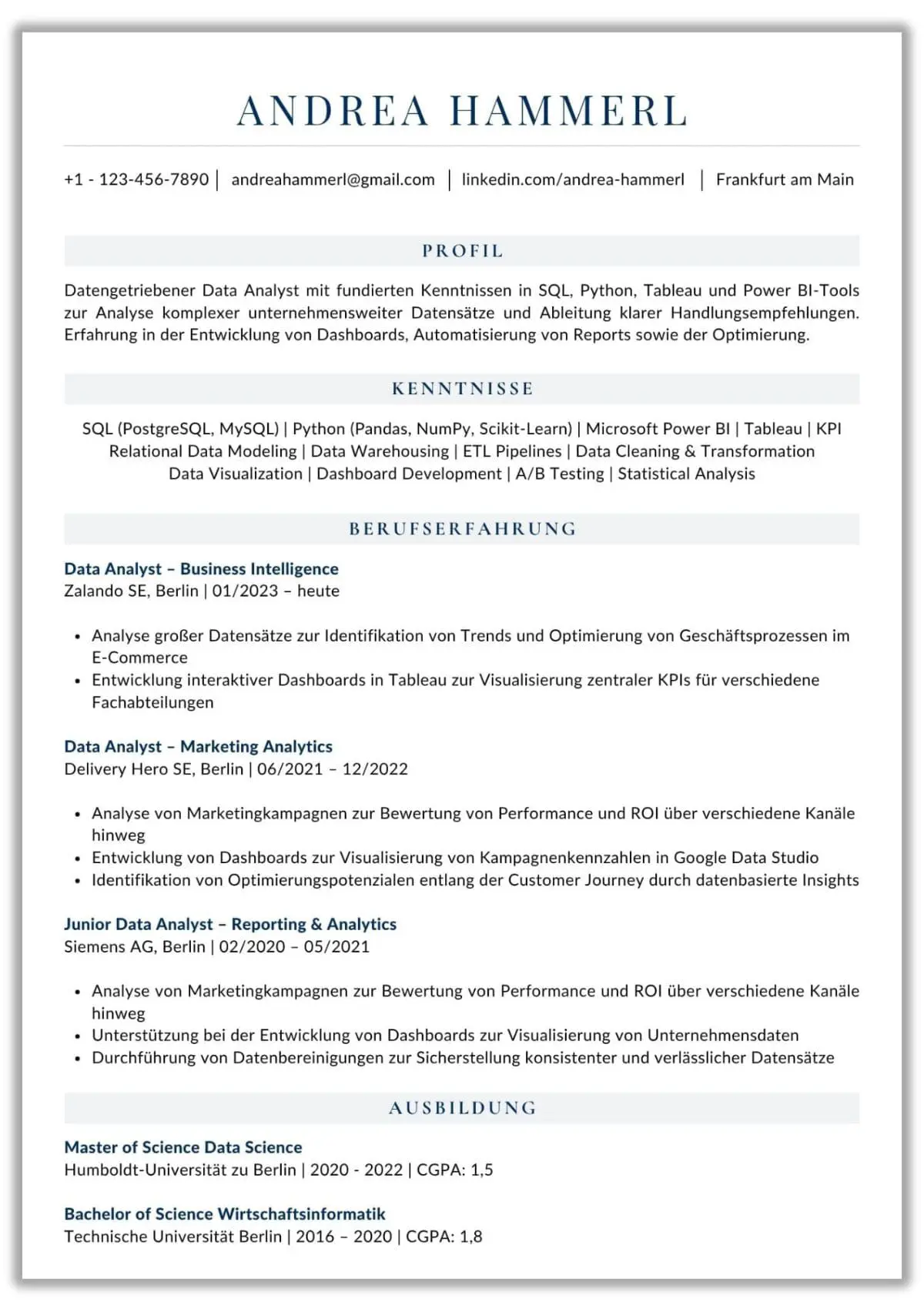
Diese Lebenslauf Vorlage Business Analyst liefert dir ein professionelles, tabellarisches Layout im modernen Design — sofort editierbar und als PDF exportierbar. Entwickelt für Bewerberinnen und Bewerber, die analytische Stärken, Tools wie Excel oder SQL und Projekterfahrung klar strukturiert präsentieren wollen.
Die Vorlage ist flexibel aufgebaut und eignet sich nicht nur für Business Analysts, sondern auch für viele weitere analytische und datenorientierte Rollen in Unternehmen. Sie kann beispielsweise für Bewerbungen als Business Intelligence Analyst, Data Analyst, IT Business Analyst, Projektanalyst oder Consultant genutzt werden.
Durch die klare Struktur für Projekte, KPIs, Analyse-Tools und messbare Ergebnisse lässt sich die Vorlage leicht an verschiedene Branchen und Aufgabenbereiche anpassen.
Produktdetails auf einen Blick
Format
Word (.docx), Apple Pages, Google Docs, Canva, PDF
Seiten
1–3, flexibel anpassbar
Layout
Modern, zweispaltig, strukturiert und klar designt
Lesbarkeit
Recruiterfreundliches Layout mit klarer Struktur für Projekte, KPIs und Analyse-Tools
Warum diese Business Analyst Lebenslauf Vorlage überzeugt
✓
Struktur für analytische Rollen:Abschnitte für Projekte, KPIs und Tools helfen Recruitern, relevante Informationen sofort zu erkennen.
✓
Fokus auf Ergebnisse:Das Layout unterstützt die Darstellung messbarer Erfolge, Datenanalysen und Prozessverbesserungen.
✓
Professionelles Design:Modernes, übersichtliches Layout mit guter Lesbarkeit für Recruiter und Hiring Manager.
✓
Flexibel anpassbar:Geeignet für Junior-, Mid-Level- und Senior Business Analysts.
✓
Flexibel anpassbar:Farben, Schriften und Abschnitte lassen sich individuell bearbeiten.
✓
Sofort einsatzbereit:Download, bearbeiten und direkt für Bewerbungen verwenden.
Was ist eine Lebenslauf Vorlage Business Analyst?
Eine Lebenslauf Vorlage Business Analyst ist ein fertig strukturiertes, professionell gestaltetes Bewerbungsdokument, das speziell auf die Anforderungen von Business Analyst-Positionen in Deutschland zugeschnitten ist. Anders als eine allgemeine Vorlage berücksichtigt sie die spezifischen Erwartungen von Personalverantwortlichen und Applicant Tracking Systems (ATS): Sie hebt Datenanalyse, Anforderungsanalyse, KPIs, Datenmodellierung und relevante Tools wie SQL, Power BI, Excel oder Tableau strukturiert hervor – genau dort, wo Recruiter zuerst hinschauen.
Der Unterschied zu einer Standard-Vorlage liegt im Detail. Ein Business Analyst bewegt sich täglich zwischen technischen Teams, Management und Fachabteilungen. Der Lebenslauf muss das widerspiegeln: analytische Hard Skills auf der einen Seite, ausgeprägte Soft Skills wie Kommunikation und Teamarbeit auf der anderen. Diese Vorlage gibt dir die richtige Struktur dafür – und du füllst sie mit deinen Inhalten.
Warum brauchst du als Business Analyst eine spezialisierte Bewerbungsvorlage?
Ein Business Analyst bewirbt sich in einem Umfeld, in dem Personalverantwortliche täglich Dutzende Lebensläufe sichten. Studien zeigen: Recruiter brauchen im Durchschnitt 5–7 Sekunden, um zu entscheiden, ob ein Lebenslauf weitergelesen wird. In dieser Zeit muss dein Profil als Business Analyst sofort erkennbar sein.
📊 Über 4.000 Business Analyst Stellen sind aktuell in Deutschland ausgeschrieben – ein klares Signal für die hohe Nachfrage nach datengetriebenen Rollen.
Eine spezialisierte Business Analyst Vorlage reduziert Entscheidungsaufwand: Struktur, Skill-Sektionen und Ergebnisdarstellung sind bereits vorbereitet – du ergänzt nur deine Inhalte.
Entwickelt basierend auf typischen Recruiter-Leseverhalten und Business Analyst Bewerbungsanforderungen im deutschen Markt.
Wie passe ich die Vorlage an Unternehmen und Branche an?
Viele Bewerber verwenden dieselbe Version ihres Lebenslaufs für jede Bewerbung. Erfolgreiche Kandidaten gehen anders vor.
Eine gute Vorlage ist der Start – ein wirklich starker Lebenslauf entsteht durch gezielte Anpassung. Recruiter merken sofort, ob ein Bewerber verstanden hat, was das Unternehmen braucht. Drei Schritte helfen dabei:
Schritt 1 – Stellenanzeige analysieren: Welche Tools, Methoden und Soft Skills werden genannt? Diese Begriffe gehören prominent in deinen Lebenslauf, sofern du sie mitbringst.
Schritt 2 – Branchensprache verwenden: Ein BA im Pharma-Umfeld spricht von Validierung und Compliance; ein BA im E-Commerce von Conversion-Optimierung und A/B-Testing. Passe Formulierungen gezielt an
Schritt 3 – Unternehmens-KPIs spiegeln: Schau dir die Karriereseite und Pressemitteilungen des Zielunternehmens an. Welche Ziele verfolgen sie? Formuliere deine Erfolge so, dass sie zu diesen Zielen passen
💡 Tipp: Nutze nicht mehr als 30 Minuten pro Bewerbung für die Anpassung. Fokussiere auf Berufsbezeichnung, Zusammenfassung und die Top-3-Bullet-Points deiner aktuellsten Stelle.
Zielgruppe – Für wen ist diese Vorlage?
Wer sollte diese Lebenslauf Vorlage Business Analyst kaufen?
Diese Vorlage ist die richtige Wahl, wenn du dich als Business Analyst, Business Intelligence Analyst, Senior Business Analyst oder Junior Business Analyst bewirbst. Sie passt für Bewerber, die Tools wie SAP, SQL, Power BI, Tableau, Excel oder Python einsetzen und ihre Datenanalyse-Kompetenz professionell präsentieren wollen.
Besonders geeignet für:
Junior Business Analyst / Berufseinsteiger
Junior Business Analysts und Berufseinsteiger, die aus einem Studium in Wirtschaftswissenschaften, Informatik oder Wirtschaftsinformatik kommen.
Senior Business Analyst
Senior Business Analysts mit mehrjähriger Erfahrung in Projektmanagement, Anforderungsanalyse und Stakeholder-Management.
Business Analyst Spezialisierungen
Business Analysten mit Spezialisierung auf Supply Chain Management, Logistik, Marketing, Rechnungswesen oder Finanzanalyse.
IT Business Analyst IT Business Analysten, die UML, Scrum, Datenmodellierung und Prozessoptimierung in ihrer täglichen Arbeit einsetzen.
Quereinsteiger Business Analyst Quereinsteiger aus angrenzenden Bereichen wie Projektmanagement, Data Science oder Consulting.
Praktika & Studienerfahrung
Bewerber mit Praktika-Erfahrung und relevantem Studium, die ihren ersten professionellen Lebenslauf als Business Analyst erstellen.
Business Analyst Lebenslauf – Aufbau und Inhalte
Wie schreibe ich die einzelnen Abschnitte im Business Analyst Lebenslauf?
Abschnitt
Inhalt
Ziel
Persönliche Daten
Name, Kontakt, LinkedIn
Schnelle Kontaktaufnahme
Kurzprofil
3–4 Sätze über Erfahrung und Spezialisierung
Sofortige Positionierung als Business Analyst
Berufserfahrung
Projekte, Ergebnisse, KPIs
Wichtigster Abschnitt für Recruiter
Fähigkeiten
Tools, Methoden, Technologien
Sichtbarkeit für ATS-Systeme
Ausbildung
Studium oder relevante Ausbildung
Fachliche Grundlage zeigen
Zertifikate
CBAP, PMI-PBA, Scrum, Power BI
Methodenkompetenz belegen
Was gehört in welchen Abschnitt des Business Analyst Lebenslaufs?
Ein gut strukturierter Business Analyst Lebenslauf folgt einer klaren Logik: Recruiter lesen nicht linear – sie scannen. Jeder Abschnitt hat deshalb eine eigene Funktion und wird anders bewertet. Hier ist, wie du jeden Teil richtig umsetzt.
Profil / Zusammenfassung – dein persönliches Verkaufsgespräch in 60 Wörtern
Dieser Abschnitt steht direkt unter deinen Kontaktdaten und ist das erste, was inhaltlich gelesen wird. Viele Bewerber unterschätzen ihn. Dabei entscheidet er oft darüber, ob ein Recruiter weiterliest oder nicht.
Formel für ein starkes Business Analyst Profil:
[Erfahrungsniveau] + [Fachrichtung] + [1–2 messbare Stärken] + [was du dem Unternehmen bietest]
Gutes Beispiel (Senior):
Business Analyst mit 6 Jahren Erfahrung in Datenanalyse, Anforderungsanalyse und Prozessoptimierung für internationale Unternehmen in IT und Supply Chain. Spezialisiert auf Power BI Dashboard-Entwicklung und SQL-basierte Reporting-Automatisierung. Bringt cross-funktionale Teams auf eine gemeinsame Datenbasis und liefert Entscheidungsgrundlagen für das Management.
Gutes Beispiel (Junior / Berufseinsteiger):
Berufseinsteiger mit wirtschaftswissenschaftlichem Studium und Praktika-Erfahrung in Datenanalyse und Prozessdokumentation. Sicher im Umgang mit Excel, SQL und grundlegenden Dashboard-Tools. Analytisch denkend, kommunikationsstark und motiviert, Geschäftsprozesse messbar zu verbessern.
Gutes Beispiel (Quereinsteiger):
Ehemaliger Projektmanager mit 4 Jahren Erfahrung in cross-funktionalen Teams, der in die Business Analysis wechselt. Vertraut mit Anforderungsanalyse, Stakeholder-Kommunikation und Datenmodellierung aus dem Projektalltag. Zertifizierter Scrum Master (CSM) mit fundierten Kenntnissen in SQL und Datenvisualisierung.
Drei bis fünf Sätze. Keine Personalpronomen. Keine vagen Floskeln wie „teamfähig und belastbar“ – stattdessen konkrete Kompetenzen und ein klarer Bezug zur ausgeschriebenen Position.
Berufserfahrung – wo Recruiter am längsten hängen bleiben
Dieser Abschnitt ist das Herzstück deines Business Analyst Lebenslaufs. Sortiere chronologisch umgekehrt (aktuellste Stelle zuerst). Für jede Station gibst du an: Jobtitel, Unternehmen, Zeitraum, und 3–5 Aufzählungspunkte mit deinen Aufgaben und Ergebnissen.
Der häufigste Fehler: Aufgaben beschreiben statt Ergebnisse zeigen.
Schwach
Stark
Datenanalyse durchgeführt
SQL-basierte Analyse von 2 Mio. Datensätzen – Fehlerquote im Reporting um 35 % gesenkt
Dashboard erstellt
Automatisiertes Power BI Dashboard für 6 Abteilungen – manuelles Reporting ersetzt, 8 Stunden/Woche eingespart
Anforderungsanalyse gemacht
Anforderungsanalyse für SAP-ERP-Einführung mit 150 Stakeholdern – Projektzeitplan um 3 Wochen unterschritten
Beginne jeden Bullet mit einem Aktionsverb: analysiert, implementiert, entwickelt, optimiert, koordiniert, reduziert. Und: Zahlen sind deine besten Freunde. Prozentwerte, Zeitersparnisse, Kostensenkungen, Nutzerzahlen – was immer du messen konntest, gehört rein.
Senior Business Analyst Lebenslauf Beispiel
Dieses Beispiel zeigt einen Senior Business Analyst mit Beratungshintergrund und Erfahrung in Transformationsprojekten. Sie helfen dir, Formulierungen, Struktur und Wirkung besser einzuordnen.
Max Mustermann
Senior Business Analyst
Berliner Straße 52 | 60241 Frankfurt am Main | 0134 289 56 78 | a.bergmann@mail.de
Berufserfahrung
Senior Business Analyst
Senior Business Analyst | 03/2021 – heute
Leitung von Requirements-Workshops mit Fachbereich und IT im Rahmen einer SAP S/4HANA-Transformation (20+ Stakeholder)
Konzeption und Umsetzung interaktiver Power BI- und Tableau-Dashboards zur KPI-Steuerung
Prozessoptimierung nach Lean/Agile-Methoden mit messbarer Reduzierung operativer Ausfallzeiten um 18 %
Business Analyst
Deutsche Telekom AG, Bonn | 06/2018 – 02/2021
Analyse von Kundenfeedback- und Nutzungsdaten zur Identifikation zentraler Churn-Treiber (+11 NPS)
Automatisierung von Reporting-Prozessen über SharePoint und Power BI
Junior Business Analyst
Accenture GmbH, Frankfurt | 09/2016 – 05/2018
Unterstützung bei Requirements Engineering und SQL-Analysen für Retail-Reporting-Lösungen
Mitarbeit an SAP BW Datenmodellen und Dokumentation von Geschäftsprozessen
Berufsausbildung
M.Sc. Business Analytics
TU Berlin | 2016 – 2018
B.Sc. Informatik / Wirtschaftsingenieurwesen
FU Berlin | 2013–2016
Kenntnisse
Tools:SQL, Power BI, Tableau, SAP/SAP BW, Python, MS Excel, AWS, SharePoint
Welche Zertifikate stärken deinen Business Analyst Lebenslauf?
Neben fachlichen Kenntnissen und Projekterfahrung können Zertifikate ein entscheidender Differenzierungsfaktor sein. Sie zeigen Eigeninitiative, Methodenwissen und kontinuierliche Weiterentwicklung – unabhängig vom aktuellen Arbeitgeber.
Besonders im Business Analyst Umfeld signalisieren Zertifizierungen strukturiertes Vorgehen, Verständnis für etablierte Methoden und die Bereitschaft, sich professionell weiterzuentwickeln.
Zertifikat
Fokus
Relevanz
CBAP (IIBA)
International anerkanntes BA-Zertifikat
Hoch
PMI-PBA
Business Analysis im Projektumfeld
Hoch
Certified Scrum Master (CSM)
Agile Methodik
Mittel
IREB CPRE
Anforderungsmanagement
Mittel
Microsoft Power BI
Datenvisualisierung & Reporting
Mittel
AWS Cloud Practitioner
Cloud-Grundlagen
Niedrig–Mittel
ITIL Foundation
IT Service Management
Branchenabhängig
Wichtig: Nenne nur Zertifikate, die du tatsächlich besitzt oder aktuell absolvierst. Falls du dich noch in Vorbereitung befindest, kannst du dies transparent mit einem geplanten Abschlussdatum angeben.
💡 Tipp: Auch ohne Zertifikat kannst du Kompetenz zeigen – etwa durch absolvierte Online-Kurse, Projektarbeit oder dokumentierte Lernerfolge. Zertifikate ergänzen Erfahrung, ersetzen sie jedoch nicht.
Zusammenfassung – Warum diese Lebenslauf Vorlage Business Analyst?
Weil du mit einer Standard-Vorlage in einem Bewerberfeld voller Business Analysten nicht auffällst. Diese Vorlage gibt deiner Datenanalyse-Kompetenz, deinen KPI-Erfolgen und deinen Kenntnissen in SQL, Power BI, Tableau oder SAP die Bühne, die sie verdienen. Professionelles Layout, vollständig editierbar, sofort einsatzbereit – und ATS-optimiert für den deutschen Arbeitsmarkt.
Entwickelt für Business Analysten, die Ergebnisse sichtbar machen statt Aufgaben auflisten.
Sofort-Download nach Kauf. Einmal kaufen, beliebig oft nutzen.
FAQ
Häufig gestellte Fragen
Was suchen Arbeitgeber in einem Business Analyst Lebenslauf?
Business Analysten sind die Schnittstelle zwischen Fachbereich und IT. Arbeitgeber erwarten daher mehr als Toolkenntnisse – sie suchen Kandidaten, die komplexe Anforderungen strukturieren, Stakeholder koordinieren und messbare Verbesserungen erzielen.
Strukturiertes Problemlösen: Zeigt dein Lebenslauf, dass du Prozesse analysieren und optimieren kannst?
Stakeholder-Kommunikation: Wird sichtbar, dass du zwischen Management, Fachbereich und IT vermitteln kannst?
Messbare Ergebnisse: Enthält dein Profil konkrete Auswirkungen deiner Arbeit – Zeitersparnis, Qualitätsverbesserung oder Umsatzbeitrag?
💡 Recruiter sehen täglich viele Lebensläufe. Was heraussticht, ist nicht die Vorlage selbst, sondern wie klar deine Wirkung, Verantwortung und Ergebnisse erkennbar sind.
In welchen Branchen können Business Analysten diese Vorlage einsetzen?
Business Analysten arbeiten in nahezu jeder Branche. Diese Vorlage ist deshalb universell einsetzbar – von Einzelhandel bis Pharma, von Logistik bis Finanzdienstleistungen. Sie deckt branchenspezifische Anforderungen ab, weil sie genug Struktur bietet, um relevante Inhalte flexibel einzusetzen.
Geeignet für:
IT & Softwareentwicklung (Tools: SQL, Python, UML, SAP)
Wo gehören Skills im Business Analyst Lebenslauf hin?
Viele Bewerber listen Skills gesammelt am Ende ihres Lebenslaufs auf – und verschenken damit Wirkung. Eine durchdachte Skill-Architektur erhöht die Lesbarkeit für Recruiter und verbessert gleichzeitig die Erkennungsrate durch ATS-Systeme.
Hard Skills (Tools & Methoden) wie SQL, Power BI, Excel, JIRA, Confluence, UML oder BPMN gehören in einen klar sichtbaren Skills-Abschnitt – idealerweise mit Kompetenzniveau.
Soft Skills wie Kommunikationsstärke oder Moderationsfähigkeit wirken stärker, wenn sie innerhalb von Projekterfolgen und der Profil-Zusammenfassung sichtbar werden, statt als isolierte Liste.
Branchenkenntnisse (z. B. Finanzwesen, Logistik, Pharma) können als eigener Unterpunkt oder als Skill-Tags dargestellt werden, sofern vorhanden.
Zertifikate sollten in einem eigenen Block vor oder nach den Skills erscheinen – nicht zwischen Berufserfahrungen versteckt.
💡 Faustregel: Hard Skills listen, Soft Skills zeigen. Schreibe nicht nur „kommunikationsstark“, sondern belege es beispielsweise durch Präsentationen vor Stakeholdern oder moderierte Workshops.
Persönliche Daten – dein erster Eindruck in drei Sekunden
Dein Name ist deine persönliche Marke. Er steht oben, groß, eindeutig. Dazu kommen: aktuell erreichbare Telefonnummer, professionelle E-Mail-Adresse (vorname.nachname@anbieter.de), Wohnort (Stadt reicht für deutsche Stellenanzeigen), und ein Link zu deinem LinkedIn-Profil. Das war’s. Weitere persönliche Angaben sind optional und werden heute häufig weggelassen.
Den Jobtitel direkt unter deinem Namen anzugeben – also „Business Analyst“ oder „Senior Business Intelligence Analyst“ – ist ein unterschätzter Schritt. Er sagt dem Recruiter sofort, wofür du stehst. Nutze dafür die genaue Bezeichnung aus der Stellenausschreibung.
Was macht ein Business Analyst?
Ein Business Analyst ist die Schnittstelle zwischen Fachbereich und IT. Er analysiert Prozesse, identifiziert Schwachstellen und übersetzt Geschäftsanforderungen in umsetzbare Lösungen für Entwicklungsteams. Typische Aufgaben: Stakeholder-Interviews, Prozessmodellierung (BPMN, UML), Anforderungsdokumentation und Lösungstests. Die Rolle ist branchenübergreifend gefragt – von IT und Finanzen bis Logistik und Pharma.
Wie viel verdient ein Business Analyst in Deutschland?
📊 Durchschnittlich verdienen Business Analysten in Deutschland rund 67.000 € brutto pro Jahr.
Karriere-Gehalt: ca. 45.000–57.000 € im Einstieg bis zu rund 88.000 € als Senior Business Analyst
München, Frankfurt und Stuttgart zahlen bis zu 15 % über dem Schnitt. Zertifikate wie CBAP oder PMI-PBA können das Gehalt spürbar steigern.
Wie lang sollte ein Business Analyst Lebenslauf sein?
Einsteiger: 1 Seite. Erfahrene BAs: maximal 2 Seiten. Mehr wird selten vollständig gelesen. Wichtiger als die Länge ist die Qualität – jede Zeile sollte einen konkreten Mehrwert zeigen. Stellen, die mehr als 10 Jahre zurückliegen, müssen nicht ausführlich beschrieben werden.
Kann man Business Analyst ohne Erfahrung werden?
Ja. Die meisten Einsteiger kommen über ein Studium (Wirtschaftsinformatik, BWL, Informatik) oder einen Quereinstieg aus Controlling, IT-Support oder Projektmanagement. Auch ein duales Studium in Wirtschaftsinformatik, BWL oder Informatik kann eine passende Grundlage für den Einstieg sein. Was zählt: analytische Praktika, Tool-Kenntnisse in Excel, SQL oder Power BI und das IIBA ECBA-Zertifikat als ersten Nachweis. Viele Unternehmen bieten gezielt Junior-BA- oder Trainee-Programme an.
Welche Skills sollte ein Business Analyst Lebenslauf enthalten?
Tools: Excel, SQL, Power BI, JIRA, Confluence, Visio
Methoden: BPMN, UML, Scrum, User Stories, Stakeholder-Management
Nur Skills aufführen, die du wirklich beherrschst – Recruiter fragen im Interview gezielt nach.
LinkedIn und Lebenslauf – warum Konsistenz entscheidend ist
Recruiter recherchieren Bewerber fast immer online. Wenn dein LinkedIn-Profil einen anderen Fokus zeigt als dein Lebenslauf, entstehen Unsicherheiten. Konsistenz signalisiert Professionalität und stärkt deine persönliche Marke als Business Analyst.
Berufsbezeichnung: Nutze auf LinkedIn dieselbe Jobbezeichnung wie im Lebenslauf (z. B. Senior Business Analyst | Agile | BI).
Zusammenfassung: Greife dieselben Kernkompetenzen auf – in anderen Worten, aber mit identischem Schwerpunkt.
Projekterfolge: Ergänze wichtige SAR-Beispiele gekürzt als LinkedIn-Projekt oder Beitrag.
Skills: Stimme Hard Skills mit deinem Lebenslauf ab und lasse Top-Skills bestätigen.
💡 Quick Check: Öffne Lebenslauf und LinkedIn nebeneinander. Stimmen Jobtitel, Zeiträume und Fokus überein? Falls nicht, investiere 20 Minuten – es wirkt stärker als jede Designänderung.
Weitere Vorlagen
Passende Lebenslauf Vorlagen
Diese Vorlagen passen ebenfalls zu deiner Bewerbungssituation